The story and significance of the Cave of Hira (Ghar Hira) on Jabal al-Noor in Makkah — site of the first revelation — plus a practical guide to climbing the Mountain of Light.
On a small mountain northeast of the Kaaba, inside a cave barely large enough for a person to stand, the first words of the Qur'an were revealed. The Cave of Hira is not a station of Hajj or Umrah, yet for many visitors to Makkah it is one of the most moving places they will ever stand — the spot where, in the year 610 CE, the history of the world quietly changed.
This guide covers what happened at Hira, why the site matters, and what to expect if you decide to climb Jabal al-Noor.
Quick answer: The Cave of Hira (Ghar Hira) is a small cave near the summit of Jabal al-Noor, about 4 km northeast of Masjid al-Haram. It is where the Prophet Muhammad ﷺ used to retreat in seclusion and where he received the first revelation of the Qur'an — the opening verses of Surah Al-'Alaq — through the Angel Jibril (Gabriel). Visiting is a historical, not a ritual, act: it is not part of Umrah or Hajj, and there is no prescribed worship attached to the climb.
Where Is Jabal al-Noor and the Cave of Hira?
Jabal al-Noor — Arabic for the "Mountain of Light" — stands roughly 4 kilometres northeast of Masjid al-Haram, on the road toward Mina and Arafat. It rises about 640 metres above the surrounding ground and is easy to recognise by the unusual hump near its peak, which makes it stand out from the ranges around Makkah.
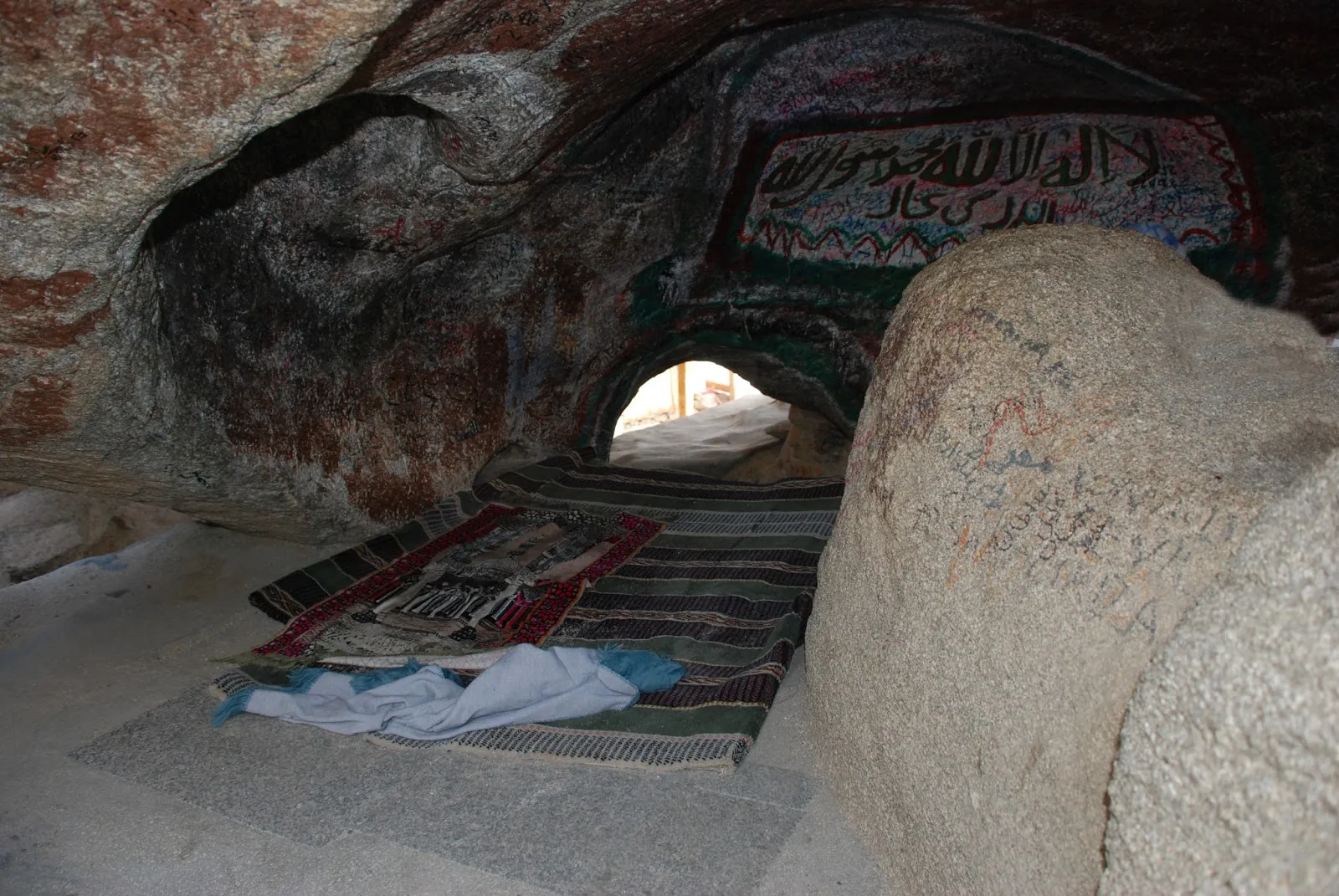
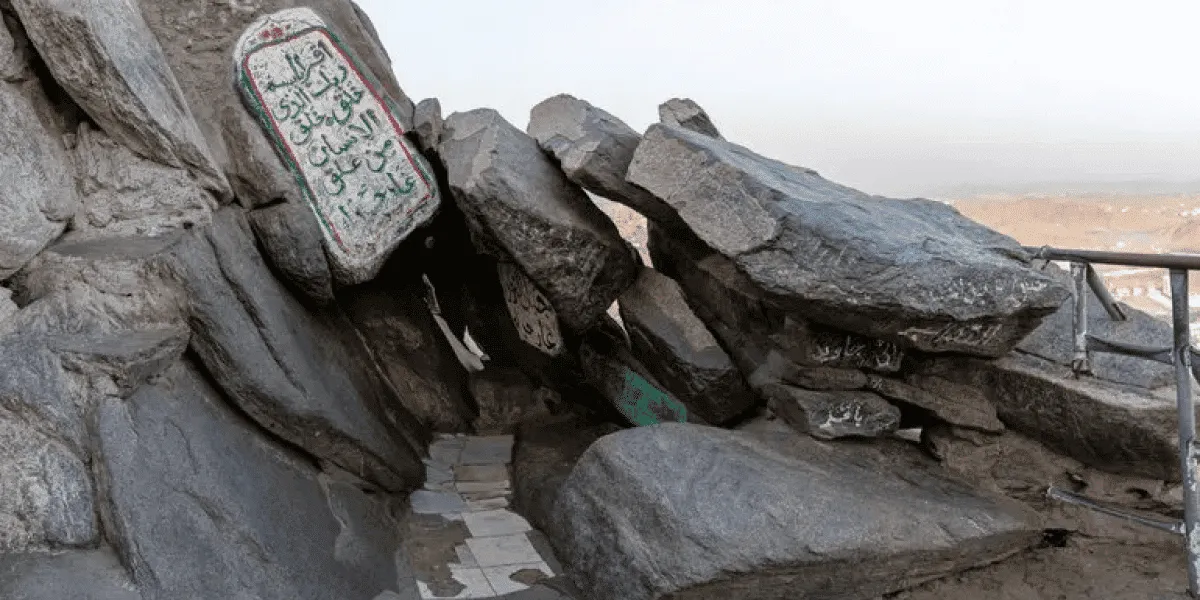
The Cave of Hira is not at the very top but tucked just below the summit. The cave itself is tiny — only about 3.5 metres long and a little over 1.5 metres wide — and famously, its opening faces toward the Kaaba. A person inside can see the direction of the Sacred Mosque, a detail that has struck visitors for centuries.
Why the Cave of Hira Matters
A place of retreat before prophethood
Before he received revelation, the Prophet Muhammad ﷺ would withdraw to the Cave of Hira for periods of solitude and reflection, a practice the early sources call tahannuth. He would take provisions, spend nights in contemplation away from the idol-worship and corruption of Makkah, and return to his family before going back again.
The first revelation
It was during one of these retreats, in the month of Ramadan when the Prophet ﷺ was about forty years old, that the Angel Jibril came to him and commanded: "Read!" (Iqra). The Prophet ﷺ replied that he could not read. After being embraced firmly three times, he received the first five verses of Surah Al-'Alaq (96:1–5):
"Read in the name of your Lord who created — created man from a clinging clot. Read, and your Lord is the most Generous — who taught by the pen — taught man that which he knew not."
Shaken by the encounter, the Prophet ﷺ hurried home to his wife Khadijah (may Allah be pleased with her), who comforted and reassured him. This moment marked the beginning of the prophethood and of the revelation of the Qur'an, which would continue over the next twenty-three years.
That single event is why Hira occupies such a place in the Muslim imagination: it is the threshold between the world before Islam and the world after it.
Climbing Jabal al-Noor: What to Expect
The climb is demanding. The path to the cave is steep and rocky, and reaching the top typically takes most visitors between 1.5 and 2 hours at a steady pace, with rest stops along the way. There are rough steps and worn tracks rather than a smooth, maintained trail, and the final stretch down to the cave mouth involves a narrow descent.
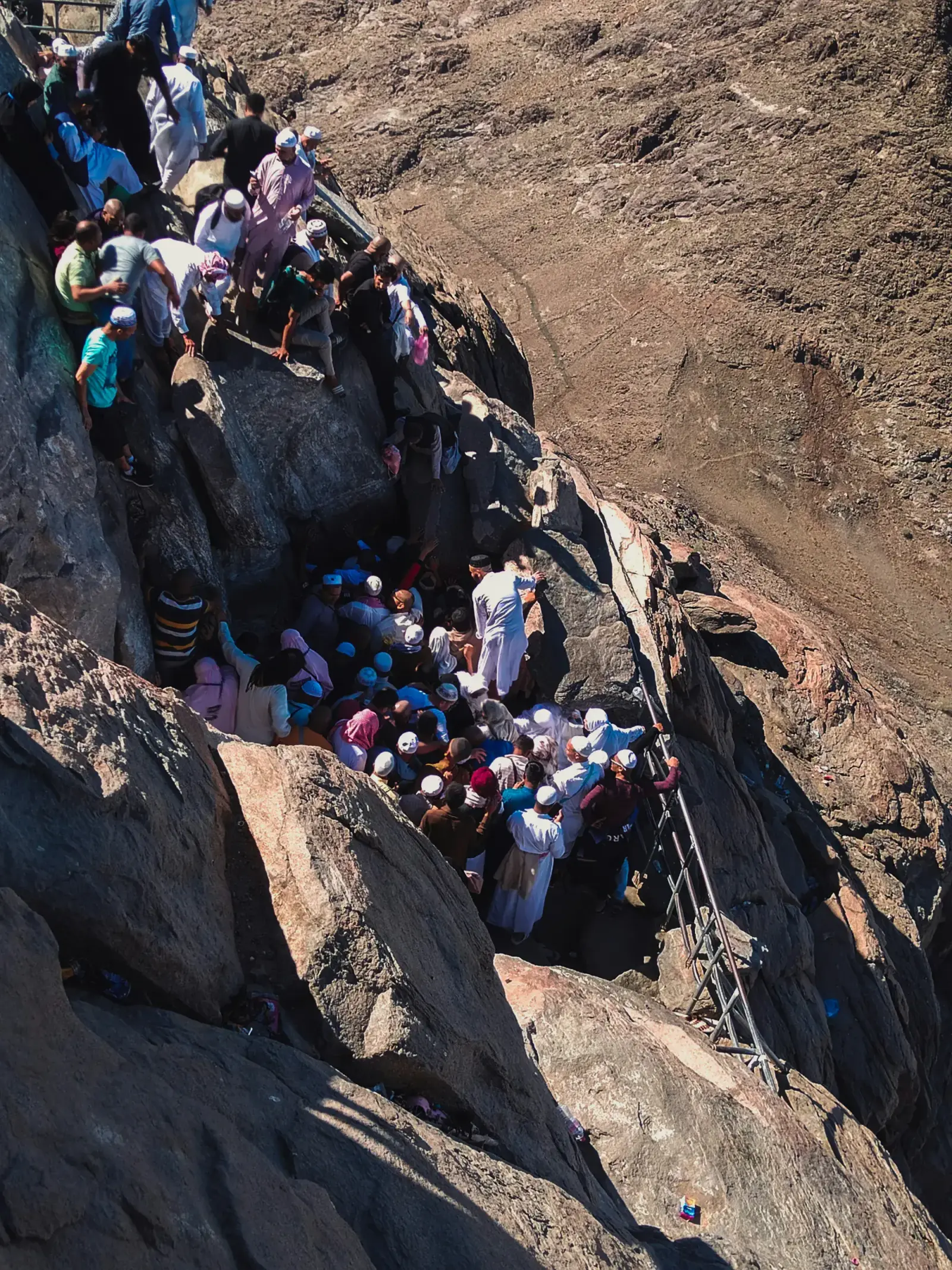
A few practical points:
- Go in the cool hours. Early morning or late afternoon is far more bearable than midday. Makkah's heat on an exposed mountainside is no small thing.
- Carry water and wear proper footwear. Closed, grippy shoes make a real difference on the loose rock.
- Pace yourself. The climb is strenuous, and it is not suitable for everyone — particularly the elderly, those with heart or mobility issues, or anyone unwell. There is no shame in admiring the mountain from below.
- Expect crowds and traders. The path is often busy, especially in Umrah and Hajj seasons, with vendors selling water and refreshments along the way.
| Quick facts | Cave of Hira / Jabal al-Noor |
|---|---|
| Location | ~4 km northeast of Masjid al-Haram |
| Mountain height | ~640 m |
| Climb time | 1.5–2 hours (one way) |
| Significance | Site of the first Qur'anic revelation |
| Part of Hajj/Umrah? | No — historical visit only |
| Best time to climb | Early morning or late afternoon |
An Important Note on Visiting
It is worth being clear about this, because it is often misunderstood: climbing to the Cave of Hira is not an act of worship and is not part of Umrah or Hajj. The Prophet ﷺ did not return to the cave to perform rituals after he was given the message, and neither did his Companions treat it as a place of pilgrimage.
Visiting Hira to learn, reflect, and connect with the history of the revelation is something many people find valuable. But there is no special prayer, supplication, or rite tied to the cave, and scholars caution against treating the mountain or the cave as a source of blessing in itself — tying threads, leaving objects, or seeking barakah from the stones are practices with no basis in the religion. Approach it as a place of history and remembrance, not as a shrine.
Making the Most of Your Visit
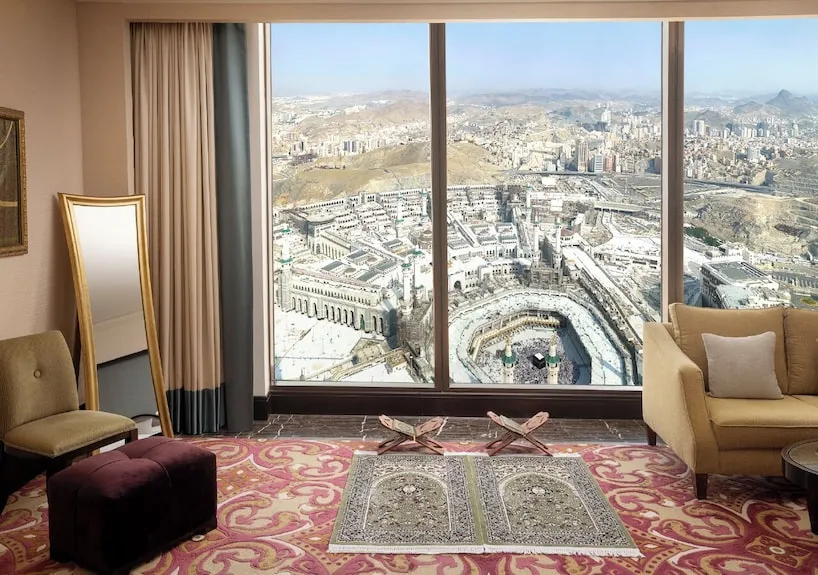
If you plan to combine a climb with your time in Makkah, think about logistics. Many pilgrims visit Jabal al-Noor on the same outing as other historical sites along the Mina–Arafat road. Staying near the Haram keeps you close to both your prayers and the transport you'll use to reach the mountain — our guide to the best areas to stay in Makkah for Umrah breaks down the neighbourhoods and walking distances.
Stay connected, too. A Saudi eSIM means you can map your route up the mountain, check prayer times, and message your group without hunting for a signal or a kiosk. And if you're reading about the Prophet's life, the companion story to Hira is the Cave of Thawr and the Hijrah — the cave south of Makkah where, years later, the Prophet ﷺ and Abu Bakr sheltered during the migration to Madinah.
You can also explore more of the city's sacred geography from our Makkah travel hub.
Frequently Asked Questions
What is the Cave of Hira?
The Cave of Hira (Ghar Hira) is a small cave near the top of Jabal al-Noor in Makkah where the Prophet Muhammad ﷺ used to retreat for reflection, and where he received the first revelation of the Qur'an — the opening verses of Surah Al-'Alaq — through the Angel Jibril.
Where is Jabal al-Noor located?
Jabal al-Noor, the Mountain of Light, is about 4 kilometres northeast of Masjid al-Haram in Makkah, along the route toward Mina and Arafat. It is recognisable by the distinctive hump near its summit.
Is visiting the Cave of Hira part of Umrah or Hajj?
No. Visiting the cave is a historical visit, not a religious rite. There is no prescribed prayer or ritual connected to it, and it is entirely optional.
How long does it take to climb to the Cave of Hira?
Most visitors take between 1.5 and 2 hours to reach the cave, depending on fitness and how often they rest. The path is steep and rocky, so it is not suitable for everyone.
Why is it called the Mountain of Light?
The name Jabal al-Noor ("Mountain of Light") is associated with the light of revelation that first came to the Prophet ﷺ at the Cave of Hira on this mountain.
What was the first verse revealed in the Cave of Hira?
The first revelation was the opening of Surah Al-'Alaq (96:1–5), beginning "Read in the name of your Lord who created."
The Bottom Line
The Cave of Hira is small, plain, and hard to reach — and that is part of why it moves people. There are no decorations, no ceremony, just a cleft in the rock where a man once sat alone in the dark and was told to read. If you have the health and the time, the climb up Jabal al-Noor is a quiet, demanding pilgrimage of the imagination back to the very first moment of the Qur'an. If you don't, the mountain is just as meaningful seen from the road below, remembered for what it gave the world.
Last updated: June 2026. This article is informational; distances and climb times are approximate. Visiting Jabal al-Noor is optional and is not part of the rites of Hajj or Umrah.