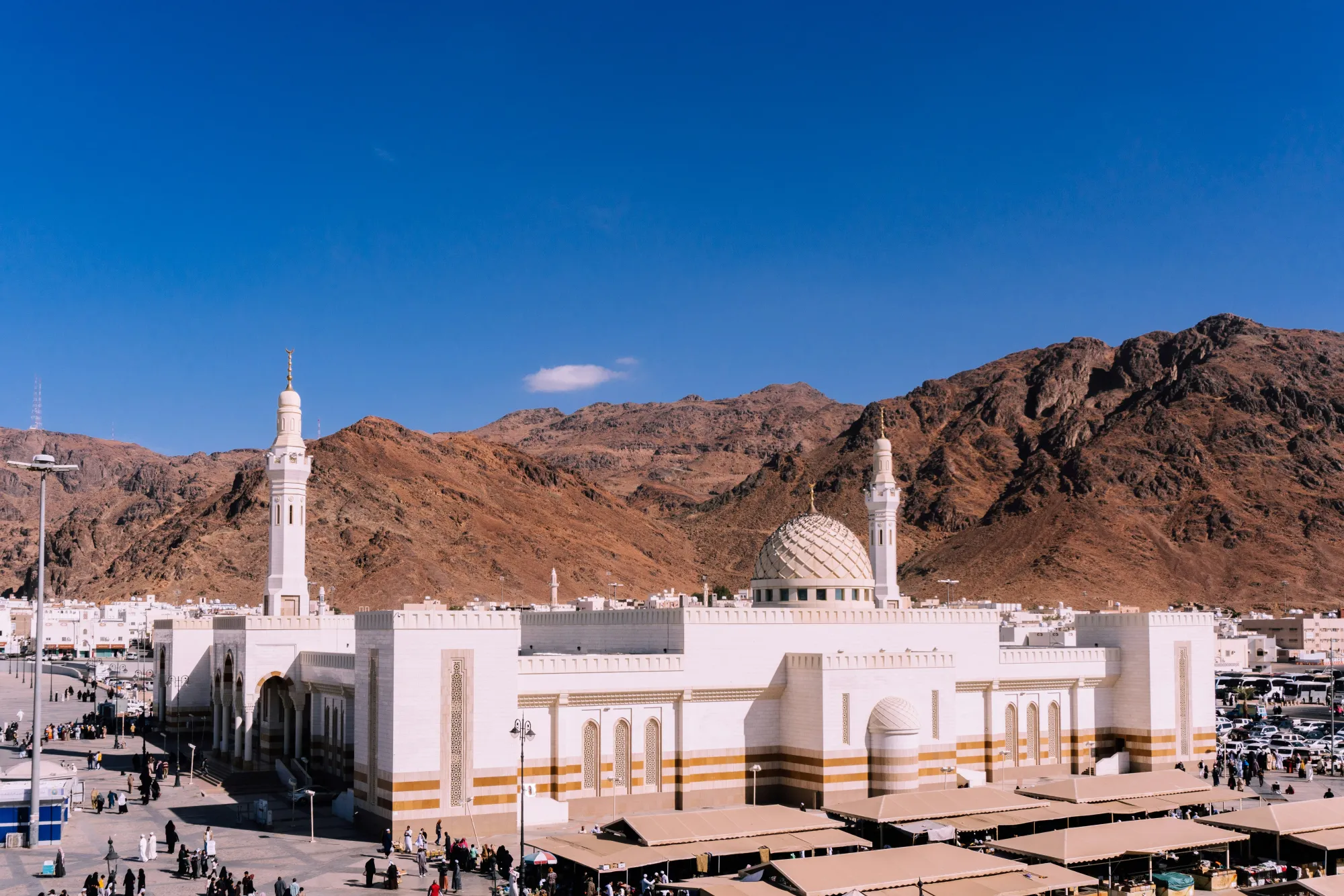
The history of Mount Uhud in Madinah and the Battle of Uhud — the lesson of the archers, the martyrdom of Hamza, and what to know when visiting Jabal Uhud and the martyrs' cemetery.
On the northern edge of Madinah stands a long, reddish mountain that the Prophet Muhammad ﷺ spoke of with affection: "This is a mountain that loves us and we love it." Mount Uhud is more than a landmark. It is the setting of one of the most instructive events in Islamic history — a battle that brought both hardship and timeless lessons, and where seventy of the Prophet's Companions, including his beloved uncle Hamza, were laid to rest.
This guide covers the story of Uhud, the lesson it carries, and what to know when you visit.
Quick answer: Jabal Uhud is the largest mountain in Madinah, about 4–5 km north of Al-Masjid an-Nabawi. It is the site of the Battle of Uhud (3 AH / 625 CE) between the Muslims and the Quraysh of Makkah. The battle's turning point came when archers left their assigned post against the Prophet's command. Seventy Companions were martyred, among them Hamza ibn Abd al-Muttalib (RA). The Prophet ﷺ loved this mountain, and its martyrs are buried at the site.
Where Is Mount Uhud?
Jabal Uhud lies roughly 4 to 5 kilometres north of Al-Masjid an-Nabawi. It is the most prominent mountain around Madinah — a long ridge of reddish rock that is easy to recognise. At its base today is the Cemetery of the Martyrs of Uhud (Maqbarat Shuhada Uhud) and a small visitor area, along with the low hill where the archers were stationed.
The Battle of Uhud
The background
A year after the Muslims' victory at Badr, the Quraysh of Makkah marched on Madinah with a large army to avenge their losses. The Prophet ﷺ led the defence near Mount Uhud.
The archers on the hill
The Prophet ﷺ placed a group of archers on a small hill — known today as Jabal al-Rumah, the Archers' Hill — to guard the army's flank. His instruction was emphatic: do not leave your position, whatever happens, whether the Muslims were winning or losing.
At first the battle went in the Muslims' favour, and the enemy began to retreat. Seeing this, most of the archers believed the fighting was over and came down from the hill to gather the spoils — disobeying the clear command they had been given.
The turning point
The exposed flank was exactly the opening the Makkan cavalry, led by Khalid ibn al-Walid (who had not yet accepted Islam), needed. They swept around the hill and attacked from behind, throwing the Muslim ranks into disarray. The tide turned, and the Muslims suffered heavy losses.
The martyrs and the wounding of the Prophet ﷺ
Seventy Companions were martyred at Uhud. Among them was Hamza ibn Abd al-Muttalib (may Allah be pleased with him), the Prophet's uncle, who is honoured as Sayyid al-Shuhada, "the master of the martyrs." The Prophet ﷺ himself was injured in the face during the fighting. Despite the setback, the Muslims regrouped, and the Makkan army withdrew without pressing their advantage to take the city.
The Lesson of Uhud
Uhud is remembered not as a tale of defeat but as a lesson the Companions and every generation since have taken to heart: the consequences of disobeying clear instructions, even with good intentions. The archers did not abandon their faith — they simply judged that the situation had changed and acted on their own reading of it. The cost was severe.
The Qur'an itself addresses the events of Uhud at length in Surah Aal 'Imran, turning the hardship into guidance about patience, sincerity, obedience, and trust in Allah through trial.
"A Mountain That Loves Us"
For all the sorrow associated with the battle, the Prophet's words about the mountain were warm. He said, "Uhud is a mountain that loves us and we love it." This affection is part of why visitors feel a particular tenderness at the site — it is a place of loss, but also of love and honour.
| Quick facts | Mount Uhud |
|---|---|
| Location | ~4–5 km north of Al-Masjid an-Nabawi |
| Event | Battle of Uhud, 3 AH (625 CE) |
| Turning point | Archers leaving Jabal al-Rumah against orders |
| Martyrs | 70 Companions, including Hamza (RA) |
| At the site today | Martyrs' cemetery and the Archers' Hill |
| Part of Hajj/Umrah? | No — historical visit only |
Visiting Mount Uhud
A visit to Uhud is straightforward and on level ground; you do not need to climb the mountain itself.
- Visit the martyrs' cemetery respectfully. The proper Islamic etiquette of visiting graves applies: greet the people of the graves, make du'a for them, and avoid any practice — touching, seeking blessing, or supplicating to the deceased — that has no basis in the religion.
- See the Archers' Hill (Jabal al-Rumah) to picture how the battle unfolded; it makes the lesson vivid.
- Go in the cooler hours and bring water, as the area is open and sunny.
- Keep it dignified. It is a place of martyrs, not a tourist photo stop — though learning and reflection are exactly the right intention.
Fitting Uhud Into Your Trip
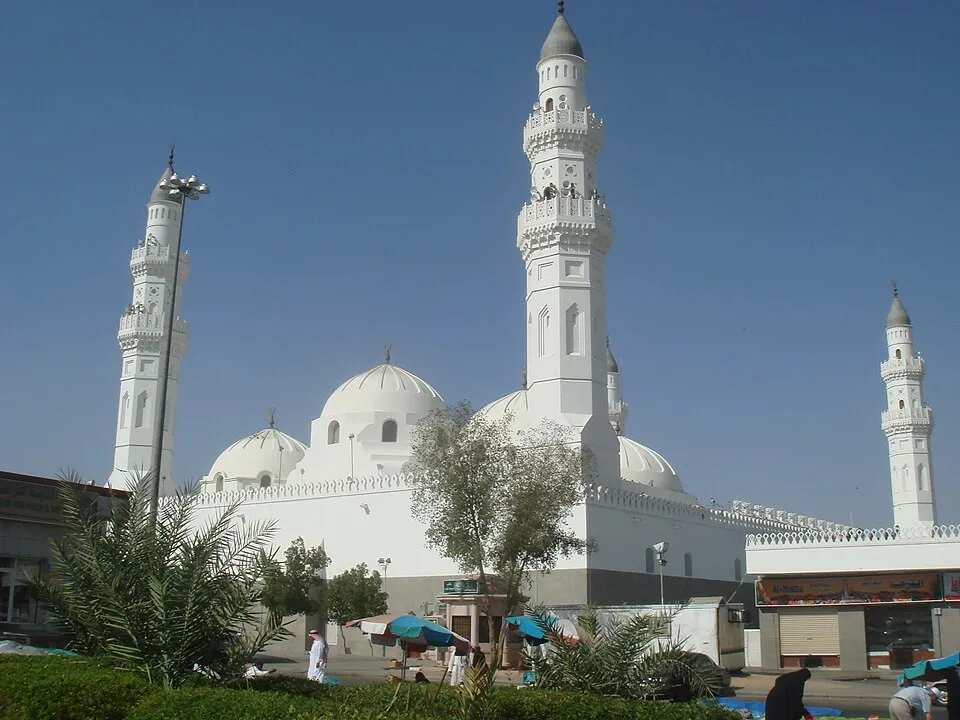
Uhud sits naturally alongside Madinah's other historical sites. Many visitors combine it with Masjid Quba, the first mosque in Islam to the south of the city, and Masjid al-Qiblatain, where the qibla was changed toward Makkah.
For where to base yourself, see our guide to the best areas to stay in Madinah near Al-Masjid an-Nabawi. A Saudi eSIM keeps you navigating between sites without hassle, and you can find more on our Madinah travel hub. Arriving from Makkah? Read how to travel between Makkah and Madinah.
Frequently Asked Questions
What is Mount Uhud?
Mount Uhud (Jabal Uhud) is the largest mountain in Madinah, on the northern edge of the city. It is the site of the Battle of Uhud, fought in 3 AH (625 CE) between the Muslims and the Quraysh of Makkah.
Why is the Battle of Uhud so important?
It carries a lasting lesson about obedience: the battle turned against the Muslims when archers left their assigned post against the Prophet's clear command. The Qur'an addresses its lessons in Surah Aal 'Imran.
Who is buried at Mount Uhud?
The seventy Companions martyred in the battle are buried at the site, in the Cemetery of the Martyrs of Uhud. Among them is Hamza ibn Abd al-Muttalib, the Prophet's uncle, known as the master of the martyrs.
What did the Prophet ﷺ say about Uhud?
He said, "Uhud is a mountain that loves us and we love it," expressing a special affection for the mountain.
Is visiting Mount Uhud part of Hajj or Umrah?
No. It is a historical visit with no ritual attached, and it is optional. The cemetery should be visited with the proper Islamic etiquette of greeting the dead and making du'a for them.
What is the Archers' Hill?
Jabal al-Rumah, the Archers' Hill, is the small hill where the Prophet ﷺ stationed his archers. Their decision to leave it changed the course of the battle.
The Bottom Line
Mount Uhud holds two things at once: the grief of seventy martyrs and a lesson the ummah has never forgotten about trusting the guidance it has been given. Stand at the foot of the mountain the Prophet ﷺ loved, greet its martyrs, reflect on the Archers' Hill, and you will understand Uhud far better than any retelling can convey.
Last updated: June 2026. This article is informational; for matters of personal religious practice, consult a qualified scholar.