Flying for Umrah and torn between Jeddah (JED) and Madinah (MED)? Compare fares, transfer times, ihram and miqat rules, and open-jaw tickets to pick the right arrival airport for your itinerary.
Every Umrah trip begins with the same quiet decision, made months before you pack a bag: which airport do you fly into? Saudi Arabia gives pilgrims two gateways — King Abdulaziz International in Jeddah (JED) and Prince Mohammad bin Abdulaziz International in Madinah (MED) — and the difference between them is bigger than most first-timers expect. It affects your fare, your first transfer, when you enter ihram, and even the order in which you visit the two Harams.
This guide compares both airports honestly, explains the one ticket trick that lets you use both, and ends with a simple decision guide by traveller type. When you're ready to check real prices, you can compare live fares to Jeddah and Madinah across 700+ airlines in one search.
Quick answer: Fly into Jeddah (JED) if you're starting in Makkah — it has the most flights, usually the cheapest fares, and fast Haramain train connections. Fly into Madinah (MED) if you're starting at the Prophet's Mosque — the airport is barely 20 minutes from the city, and you delay ihram until you travel on to Makkah. For the classic Makkah-then-Madinah route (or the reverse), the smartest ticket is often a multi-city ("open-jaw") fare: into one airport, home from the other.
The two airports at a glance
| Jeddah (JED) | Madinah (MED) | |
|---|---|---|
| Full name | King Abdulaziz International | Prince Mohammad bin Abdulaziz International |
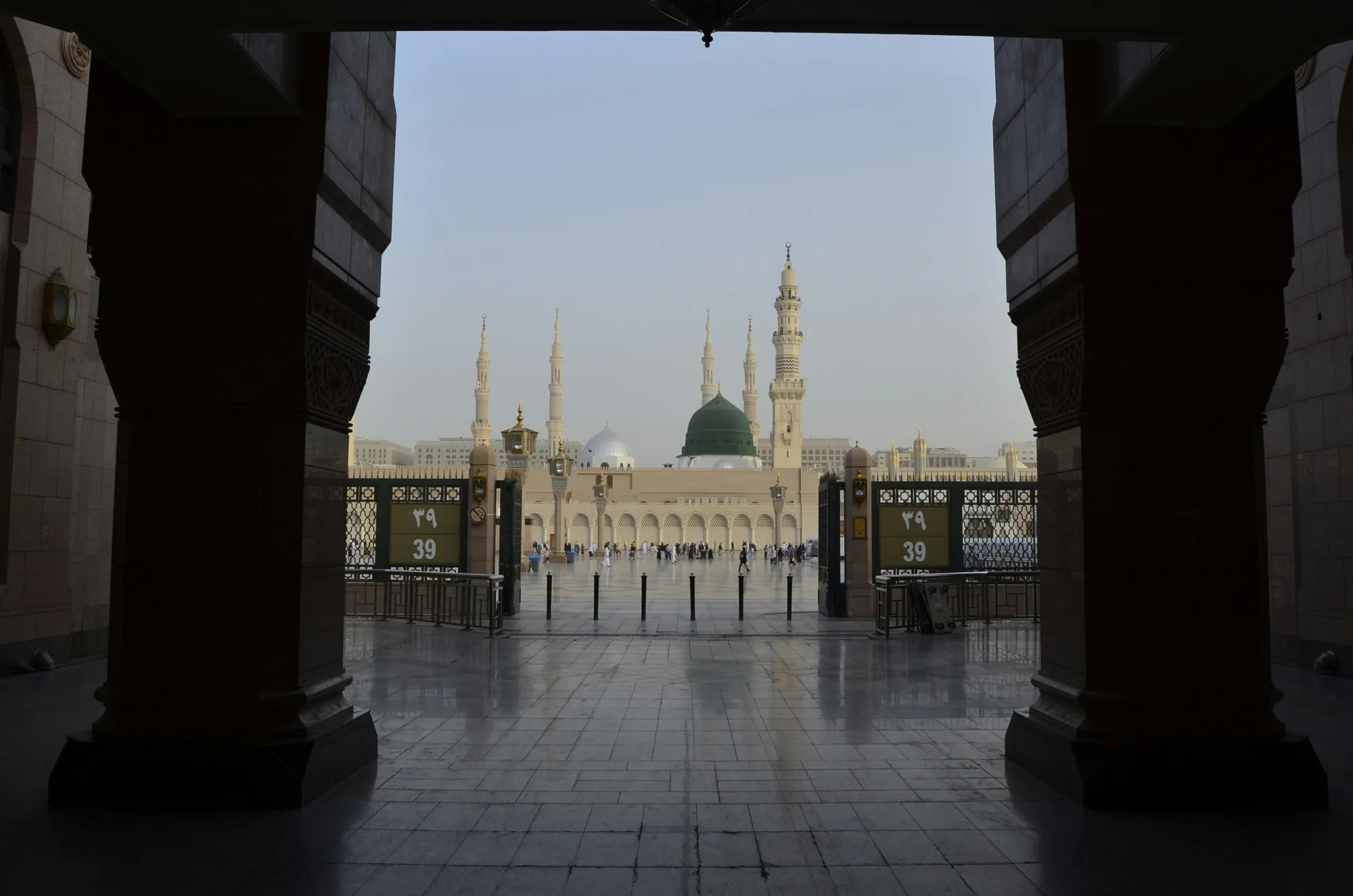
| Serves | Makkah (≈85–95 km away) | Madinah (≈15–20 min from the Prophet's Mosque) |
| Flight network | Largest in the Kingdom for pilgrims — most airlines, most direct routes | Smaller but growing fast; strong seasonal and regional coverage |
| Typical fares | Usually the cheapest gateway | Often slightly higher, sometimes equal on big routes |
| Onward transfer | Haramain high-speed train (35–45 min) or road (60–90 min) | Short taxi or hotel transfer |
| Ihram consideration | Must be in ihram before landing (miqat is crossed in the air) | No ihram needed on arrival — you enter it later, en route to Makkah |
| Best for | Makkah-first itineraries, bargain hunters, large-group departures | Madinah-first itineraries, families, gentler arrivals |
Jeddah (JED): the workhorse gateway to Makkah
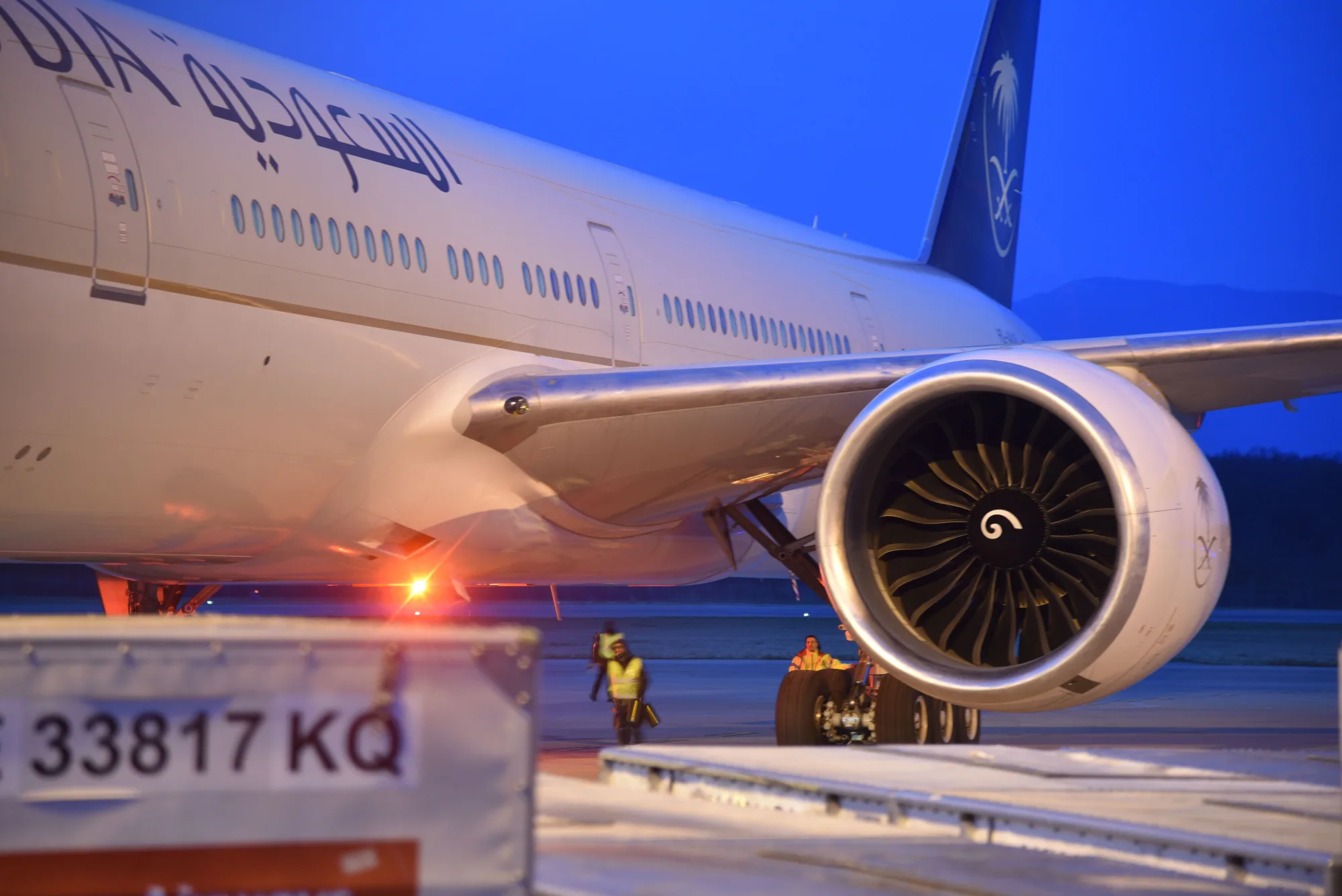
King Abdulaziz International is the airport most pilgrims know, and for good reason: it handles the overwhelming majority of Umrah and Hajj traffic, has a dedicated Hajj Terminal, and is served by virtually every airline that flies to Saudi Arabia — Saudia, flynas, flyadeal, Turkish Airlines, Emirates, Qatar Airways, Garuda, PIA, EgyptAir and dozens more.
Why pilgrims choose JED:
- The most flights and the lowest fares. Competition on routes into Jeddah is fierce, which keeps prices down. If budget is your first filter, start your search here — you can check today's fares to Jeddah in under a minute.
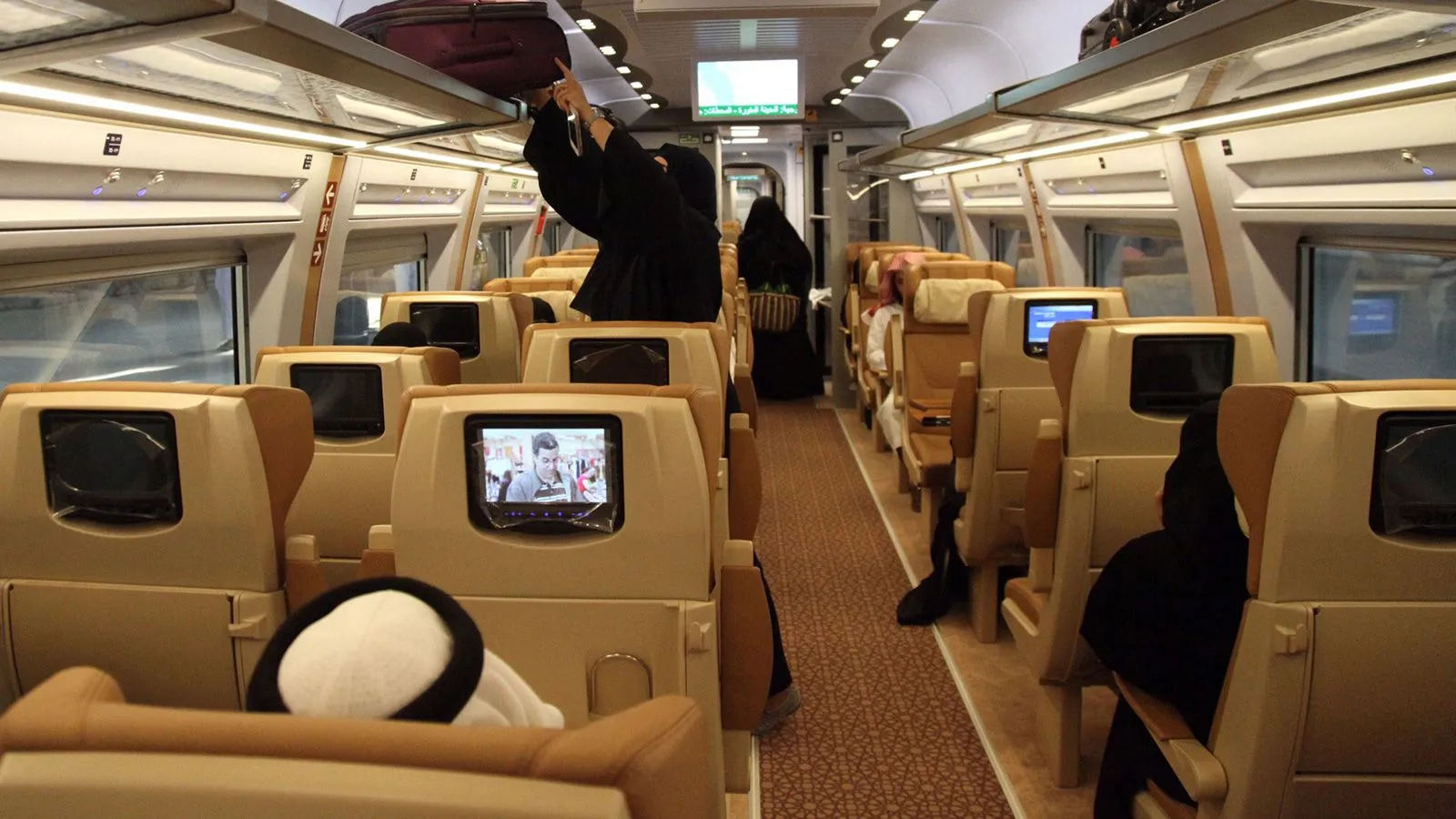
- The Haramain high-speed train. The railway station is built into Terminal 1, and trains reach Makkah in 35–45 minutes at up to 300 km/h. It's the fastest airport-to-Haram connection in the Kingdom.
- Familiar infrastructure for groups. Tour operators, group mutawwif services and transfer companies all run well-oiled operations out of JED.
The trade-offs:
- Makkah is still 85–95 km away. Whatever you save on the fare, budget 1–2 hours (and a train ticket or transfer fare) to reach your hotel. Our full guide to the Jeddah Airport to Makkah journey compares every option with current prices.
- It's busy. Immigration queues after several wide-bodies land together can be long, especially in Ramadan.
- Ihram before you land. Flights into Jeddah cross the miqat in the air — you must be in ihram before that announcement. Most pilgrims change at their departure airport or during a stopover (more on this below).
Madinah (MED): the calm arrival
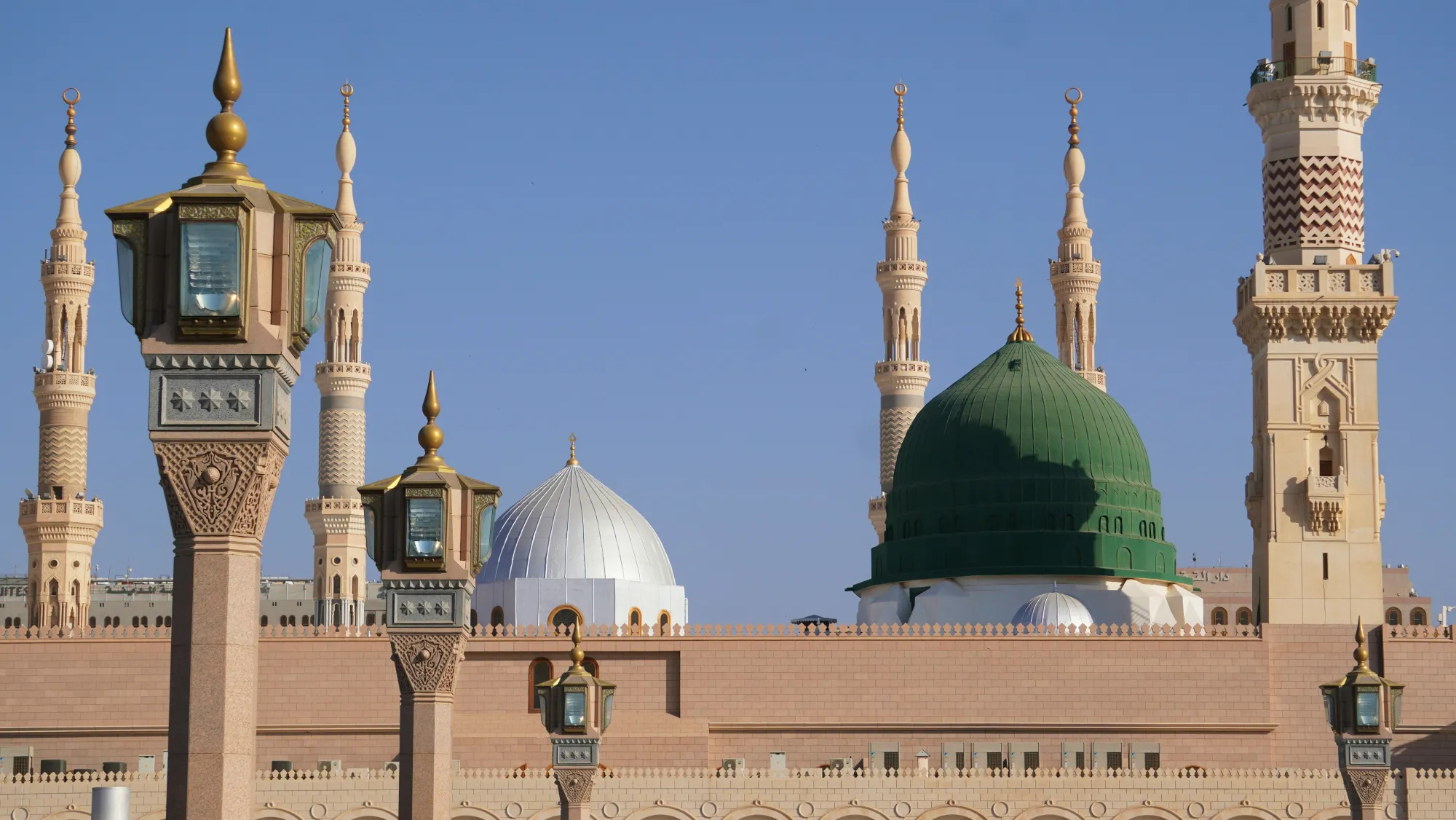
Prince Mohammad bin Abdulaziz International is smaller, quieter and dramatically closer to its city: most pilgrims are at their hotel near the Prophet's Mosque within half an hour of leaving the terminal. Saudia, flynas and flyadeal connect it to dozens of cities, and international carriers — Turkish Airlines, Qatar Airways, Emirates (seasonal), AirAsia, and strong Umrah-season charters — keep adding routes.
Why pilgrims choose MED:
- You land practically inside your destination. No 90-minute onward leg while jet-lagged; a 15–20 minute taxi and you're done. For families with children or elderly travellers, this is the single biggest quality-of-life win in Umrah planning.
- No ihram stress on arrival day. Madinah lies outside the miqat boundaries. You arrive in normal clothes, rest, visit the Prophet's Mosque — and only enter ihram days later at Dhul-Hulayfah (Abyar Ali), Madinah's own miqat, on your way to Makkah. Many pilgrims find this sequencing far gentler than changing in an airport bathroom mid-journey.
- Faster airport experience. Smaller terminal, shorter queues, calmer arrivals hall.
The trade-offs:
- Fewer routes, sometimes higher fares. From smaller origin cities you may not find a direct flight, or the fare may run higher than to JED. Big hubs (Istanbul, Cairo, Dubai, Kuala Lumpur, Jakarta in season) are well covered.
- You'll still travel to Makkah. The Haramain train covers Madinah–Makkah in about two hours; see our guide to travelling between Makkah and Madinah.
The ihram and miqat question (read this before booking)
This detail decides the airport question for many pilgrims, so it deserves its own section.
- Flying into Jeddah: your aircraft crosses the miqat boundary before landing. You must already be in ihram (with your intention made at or before the miqat) when that happens. Cabin crew on routes to JED announce the crossing 30–60 minutes ahead. Practically, you change into ihram garments at your departure airport, during a stopover, or on board early in the flight.
- Flying into Madinah: Madinah is outside the miqat, so no ihram is required for arrival. You assume ihram later — typically at the Dhul-Hulayfah miqat just outside Madinah when you set out for Makkah, with time to shower and prepare properly at the mosque there.
Neither is "better" religiously — both are fully valid. But if the idea of managing ihram on a long-haul flight worries you (or you're travelling with someone it would burden), a Madinah-first itinerary removes the issue entirely.
The smartest ticket most pilgrims never book: open-jaw
Almost every Umrah itinerary visits both cities. Yet most travellers book a round trip to a single airport and backtrack — Makkah → Madinah → all the way back to Jeddah for the flight home, a 4+ hour detour.
The fix is a multi-city (open-jaw) ticket: fly into Jeddah and home from Madinah, or the reverse. Your route becomes a clean line — airport → first holy city → second holy city → airport — with the Haramain train as the single connector in the middle.
| Itinerary | Route on the ground | Backtracking |
|---|---|---|
| Round trip to JED | JED → Makkah → Madinah → back to JED | ~4–5 hours wasted |
| Round trip to MED | MED → Madinah → Makkah → back to MED | ~4–5 hours wasted |
| Open-jaw JED in / MED out | JED → Makkah → Madinah → MED | None |
| Open-jaw MED in / JED out | MED → Madinah → Makkah → JED | None |
On major carriers an open-jaw usually prices at (or very near) the round-trip fare — you're not paying for two one-ways. Search with the "multi-city" option and compare both directions; our flight search supports exactly this kind of comparison across airlines.
Fares and availability: what to actually expect
A few honest rules of thumb for 2026:
- JED is usually cheaper, because more airlines fight over it. From major Umrah markets — Jakarta, Kuala Lumpur, Karachi, Lahore, Delhi, Istanbul, Cairo, London, Casablanca — direct flights to Jeddah run daily or better.
- MED pricing has improved sharply as capacity grows; on big routes (Istanbul, Cairo, Dubai) the difference is often negligible. Always search both airports — the spread can pay for your Haramain train tickets and more.
- Season moves prices more than airport choice. Ramadan — especially the last ten nights — and the weeks around Hajj multiply fares on both airports alike. Our guide to when to book Umrah flights covers the booking calendar in detail, and the best time for Umrah covers crowds and weather.
Decision guide by traveller type
- First-time pilgrim, standard Makkah-first plan: JED, with the Haramain train onward. Most flights, most support, best fares.
- Family with children or elderly travellers: MED-first. The 20-minute arrival transfer and no-ihram landing remove the two hardest parts of arrival day.
- Visiting both cities (most pilgrims): Open-jaw — into one, home from the other. Pick the inbound airport by fare and by whether you want Makkah or Madinah first.
- Budget-focused solo traveller: Search both airports with flexible dates and take the cheaper; fares swing week to week. Start with a live comparison.
- Short trip focused on Makkah only: JED, no question — the train makes it painless.
Frequently Asked Questions
Which airport is closer to Makkah?
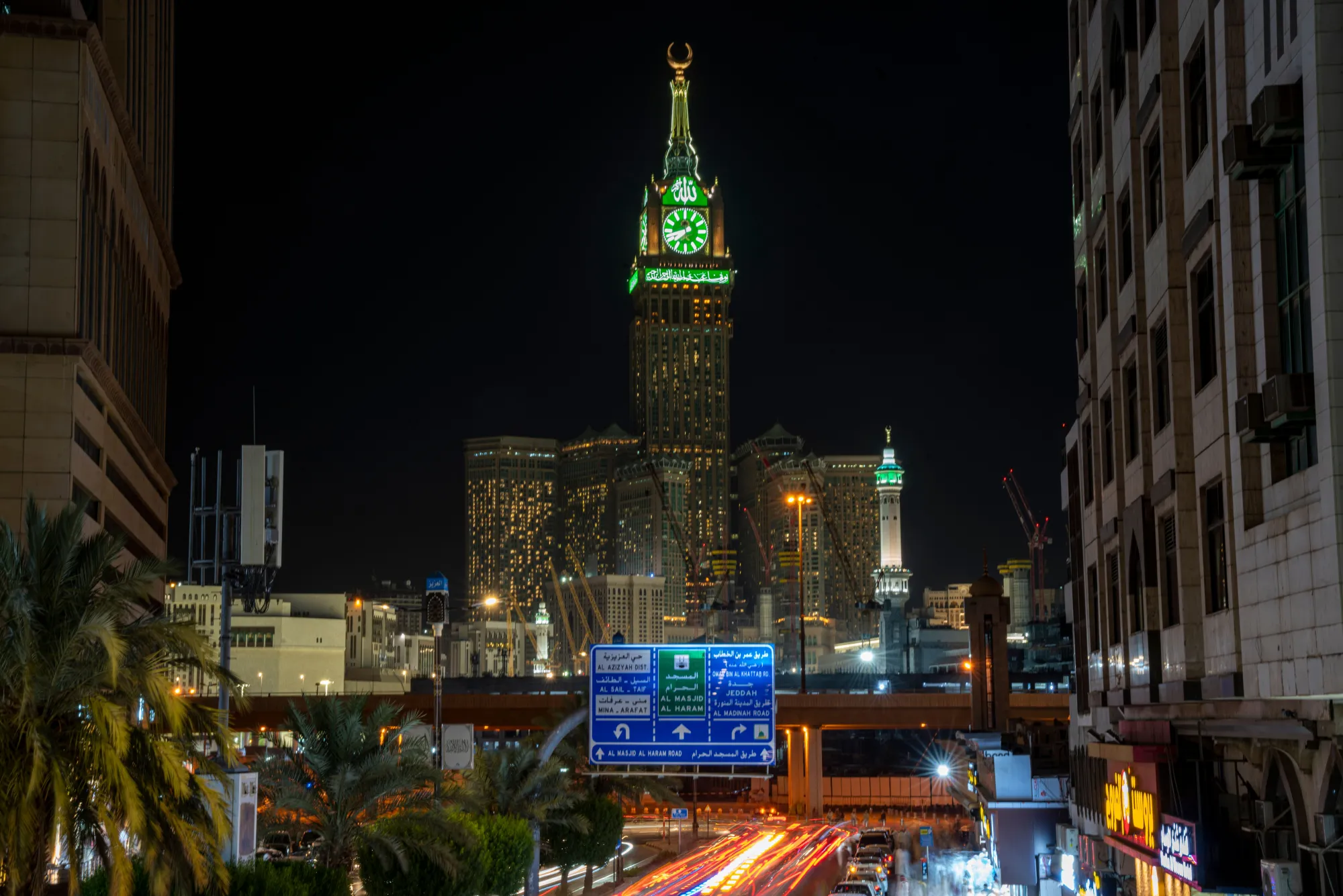
Jeddah (JED) — about 85–95 km away, or 35–45 minutes on the Haramain high-speed train. Madinah's airport serves Madinah, which is roughly 450 km from Makkah (about 2 hours by train).
Can I fly into Jeddah and out of Madinah on one ticket?
Yes — that's an open-jaw / multi-city ticket, and on most airlines it costs about the same as a normal round trip. It's the most efficient routing for pilgrims visiting both cities.
Do I need to wear ihram when landing in Madinah?
No. Madinah lies outside the miqat boundaries, so you arrive in regular clothing. You enter ihram at Dhul-Hulayfah (Abyar Ali) when you later travel to Makkah for Umrah.
When do I put on ihram if I fly into Jeddah?
Before your aircraft crosses the miqat, which the crew announce during the flight — usually 30–60 minutes before it happens. Most pilgrims change at the departure airport or a stopover and make the intention on board at the announcement.
Is Madinah airport more expensive to fly into?
Sometimes, because it has fewer routes — but the gap has narrowed a lot, and on major routes the fares are frequently comparable. Always price both airports before booking.
Which airport is better in Ramadan?
Both get extremely busy and expensive. MED's smaller terminal can mean quicker processing, but capacity is tighter, so book 4–6 months ahead for Ramadan whichever airport you choose.
Final thoughts
There's no universally "right" airport — there's the right airport for your itinerary. Starting at the Kaaba? Jeddah, with the train onward. Starting with the Prophet's Mosque, or travelling with family? Madinah, and thank yourself on arrival day. Doing the full classic route, as most pilgrims do? Book the open-jaw and never backtrack. Whichever you choose, compare both airports on real dates before you decide — a two-minute flight search settles the question with numbers instead of guesswork.
Planning the rest of the journey? Read our guides on getting from Jeddah Airport to Makkah, travelling between Makkah and Madinah, when to book Umrah flights, and the best areas to stay in Makkah.
Last updated: July 2026. Routes, fares and airline networks change with season and demand; always confirm details before booking.