
How far in advance should you book Umrah flights? A 2026 guide to the cheapest months, the Ramadan price surge, ideal booking windows by season, and 7 proven tactics to cut your airfare.
Two families perform the same Umrah, stay in the same hotel, pray in the same rows. One paid three times more to get there — not because of the airline or the cabin, but because of when they booked and when they flew. Airfare is the most elastic cost in the entire Umrah budget, and it's also the one you can influence most with nothing but timing.
This guide lays out the booking calendar that actually works in 2026: how far ahead to buy for each season, which months are genuinely cheapest, how Ramadan reshapes prices, and seven practical tactics that consistently lower fares. When you're ready to test any of it, run a live fare search across 700+ airlines and watch the theory show up in the numbers.
Quick answer: For a normal Umrah trip, book 6–10 weeks before departure — that's the reliable sweet spot for fares to Jeddah and Madinah. For Ramadan, treat it like Hajj: book 4–6 months ahead, because prices climb relentlessly and the last ten nights sell out first. The cheapest windows of the Islamic year are the weeks right after Ramadan and the stretch after Hajj until Rabi' al-Awwal — fewer crowds, softer fares, same Umrah.
Why Umrah fares behave differently
Ordinary leisure routes follow school holidays and summer. Flights to Jeddah (JED) and Madinah (MED) follow the Islamic calendar — and because that calendar shifts ~11 days earlier every Gregorian year, the "expensive season" moves too. Three forces set the price of your seat:
- Religious season. Ramadan is the single biggest driver; demand rises through the month and peaks in the last ten nights. The weeks around Hajj distort everything again (and Umrah visas pause around Hajj itself — see our guide to the best time for Umrah).
- Your home country's calendar. School breaks and public holidays in Indonesia, Pakistan, Turkey, the UK or Egypt push up fares from those markets even when Saudi Arabia is quiet.
- Plain airline economics. Midweek departures, flexible dates and open seats near the front of the booking curve — the usual rules still apply underneath the religious seasonality.
Understand these three layers and the rest of this guide is just execution.
The booking windows that work, season by season
| When you're flying | Book this far ahead | Why |
|---|---|---|
| Regular months (no peak) | 6–10 weeks | Airlines release discounted seats in this window; earlier rarely helps, later gets expensive fast |
| Ramadan — first 20 days | 4–5 months | Demand builds all month; early birds capture the sane fares |
| Ramadan — last 10 nights | 5–6 months | The single most contested travel window in the Muslim world |
| School holidays in your country | 3–4 months | Origin-market demand, not Saudi demand, drives these spikes |
| Just after Ramadan / after Hajj | 3–6 weeks | Demand collapses; airlines discount to refill planes — late booking is genuinely safe here |
Two honest caveats. First, "earlier is always cheaper" is a myth — eight months out you'll usually see standard fares, not sales; the discounting happens inside the windows above. Second, last-minute miracles are rare on pilgrim routes: unlike beach destinations, unsold seats to Jeddah in Ramadan simply don't exist to be dumped.
The cheapest months to fly for Umrah
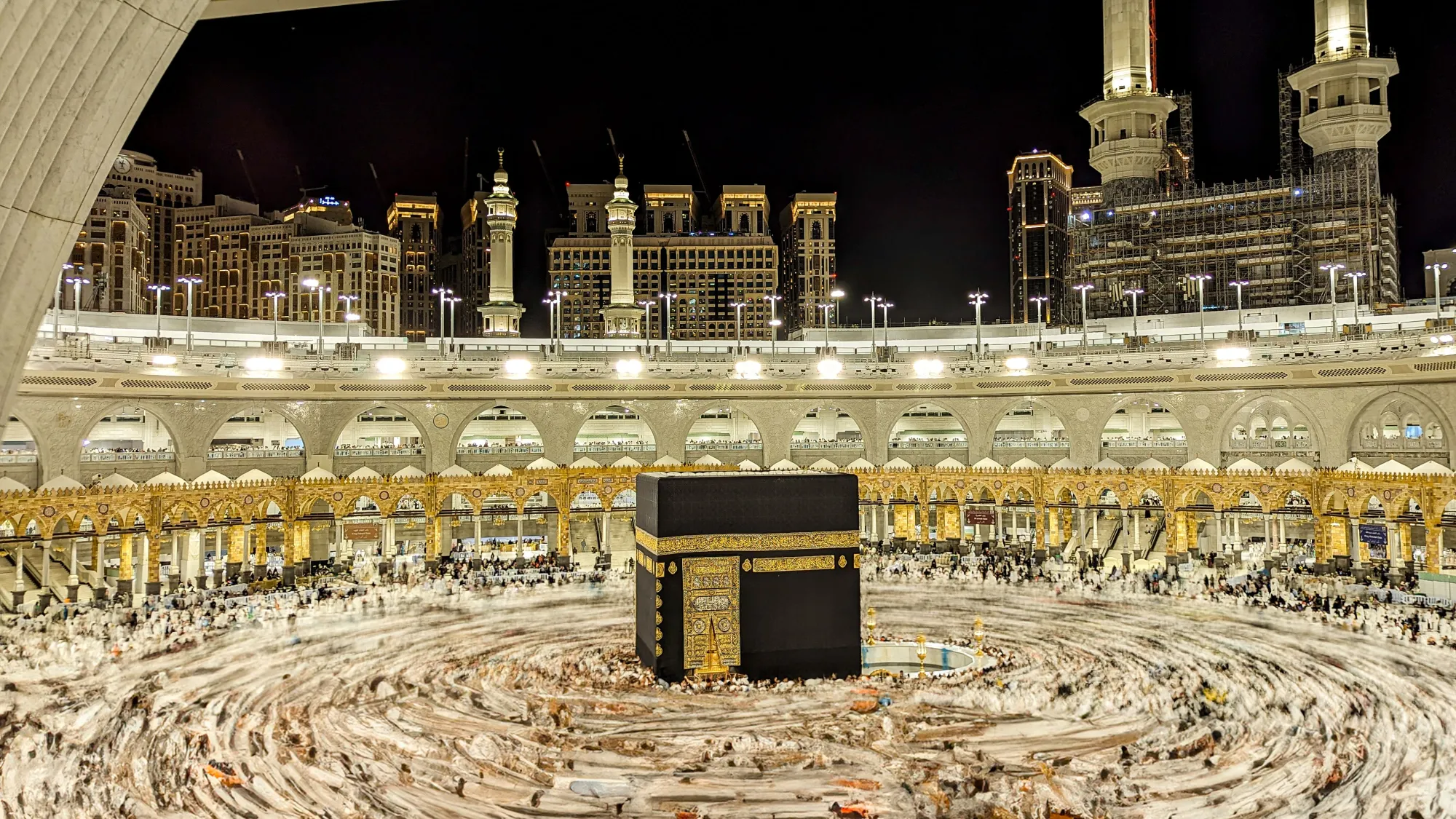
Thinking in the Islamic calendar (since that's what prices follow):
- Muharram & Safar (after Hajj): the year's deep lull. Hajj travellers have gone home, Ramadan is months away, and fares from most markets hit their floor. If your only goal is the cheapest valid Umrah, this is it.
- Rabi' al-Awwal to Jumada al-Thani: steadily quiet. Comfortable fares, moderate crowds, and pleasant winter weather in the holy cities for much of it — arguably the best value-to-experience ratio of the year.
- Rajab & Sha'ban: the ramp begins. Many pilgrims deliberately go "before Ramadan"; fares climb week by week — book earlier here.
- Ramadan: peak of peaks. Expect fares 2–3× normal from most origin cities, worse for the last ten nights.
- Shawwal (after Eid): demand falls off a cliff; airlines discount hard. One of the smartest bargain windows — the Haram is calm and tickets are soft.
- Dhul-Qa'dah & Dhul-Hijjah: Umrah winds down and pauses around Hajj; seats are dominated by Hajj traffic at Hajj prices. Not an Umrah bargain window.
For how these months feel on the ground — heat, crowds, hotel prices — pair this with our month-by-month guide to the best time for Umrah.
Ramadan: a special case worth its own plan
If Ramadan is the goal — and for the reward of an Umrah in Ramadan, for many it rightly is — accept upfront that you're buying in the world's most competitive travel window, and plan accordingly:
- Book 4–6 months out, full stop. Watching and waiting loses money in Ramadan; fares almost never dip as it approaches.
- The first half of Ramadan is meaningfully cheaper than the last ten nights — and dramatically less crowded at the Haram.
- Consider flying into Madinah first. MED capacity in Ramadan is tighter but arrivals are calmer, and you shift your Makkah days away from your arrival fatigue. Our Jeddah vs Madinah airport guide covers this choice in depth.
- Budget the whole trip, not just the flight. Hotels near the Haram surge even harder than airfare — see the best areas to stay in Makkah for how location trades against price.
7 tactics that reliably cut Umrah airfare
1. Search both airports, always
Jeddah (JED) and Madinah (MED) are priced independently, and the spread on your dates can be large enough to cover your Haramain train tickets between the cities — twice. Every search should include both. A single comparison search shows both gateways side by side.
2. Fly midweek
Tuesday and Wednesday departures are consistently cheaper than Thursday–Sunday on pilgrim routes, because group tours cluster around weekends. If your dates have any give at all, this is the easiest money you'll ever save.
3. Book the open-jaw
Into one holy city's airport, home from the other's — usually at round-trip prices. You save a 4–5 hour backtrack and often unlock cheaper inventory on one of the two leg. (Full explanation in the airport guide.)
4. Give the search engine flexible dates
A ±3-day flex routinely finds fares 20–30% lower on these routes. Decide your dates after seeing the fare calendar, not before.
5. Watch your own country's holidays, not just Saudi seasons
A quiet week in Makkah can still be an expensive week to fly out of Jakarta or London if schools are out. Cross-check both calendars before locking dates.
6. Weigh one short stop against the direct
From many cities, a single Gulf or Istanbul stopover cuts the fare substantially — and doubles as a practical place to change into ihram calmly before the final leg into Jeddah. Direct is worth paying for with children or elderly travellers; otherwise, price the stop.
7. Book the flight first, then build around it
Airfare is the most volatile piece of the trip; hotels and transfers move less and can be arranged after. Once the flight is locked, sort your airport transfer, your hotel near the Haram, and a Saudi eSIM so you land with everything handled.
When not to buy
- Not in the first excitement of planning, 8+ months out — you'll pay standard fares and gain nothing but peace of mind (which, granted, has value for Ramadan).
- Not in the final two weeks before a peak-season trip — this is where fares do their worst damage.
- Not without checking one day either side of your intended dates. Thirty seconds of flexibility beats an hour of coupon hunting.
Frequently Asked Questions
How far in advance should I book Umrah flights?
For regular months, 6–10 weeks before departure is the reliable sweet spot. For Ramadan, book 4–6 months ahead; for travel during your country's school holidays, aim for 3–4 months.
What is the cheapest month to fly for Umrah?
In Islamic-calendar terms: Muharram–Safar (right after Hajj) and Shawwal (right after Ramadan) are the softest fare windows from most origin markets. They're also among the quietest, most comfortable times at the Haram.
How much more expensive are Ramadan flights?
From most major origin cities, expect 2–3× normal fares, with the last ten nights the most expensive and the first ten days the most affordable part of the month.
Are last-minute Umrah flight deals a thing?
Rarely. Pilgrim routes don't behave like holiday routes — in peak periods seats sell out rather than get discounted. The exception is the post-Ramadan and post-Hajj lulls, when booking 3–6 weeks out (or even closer) is genuinely safe.
Is it cheaper to fly into Jeddah or Madinah?
Jeddah is usually cheaper thanks to more competition, but Madinah has closed the gap on major routes — and it's far closer to its city. Always price both; the difference varies week to week. See our full JED vs MED comparison.
Do flight prices drop closer to the departure date?
On these routes, almost never during peak seasons, and only occasionally in quiet ones. The dependable savings come from booking inside the 6–10 week window and flying midweek — not from waiting.
Final thoughts
Cheap Umrah airfare isn't luck — it's calendar literacy. Know where your trip falls in the Islamic year, book inside the right window for that season, keep your dates a little flexible, and always price both airports. Do those four things and you'll consistently pay less than the pilgrim in the next seat, with nothing sacrificed. Start with a live search, check both Jeddah and Madinah on a midweek departure, and see what your dates really cost.
Planning the rest of the journey? Read our guides on which airport to fly into for Umrah, the best time for Umrah, getting from Jeddah Airport to Makkah, and the Umrah packing list.
Last updated: July 2026. Fare patterns are indicative and vary by origin market, airline and demand; always compare live prices before booking.