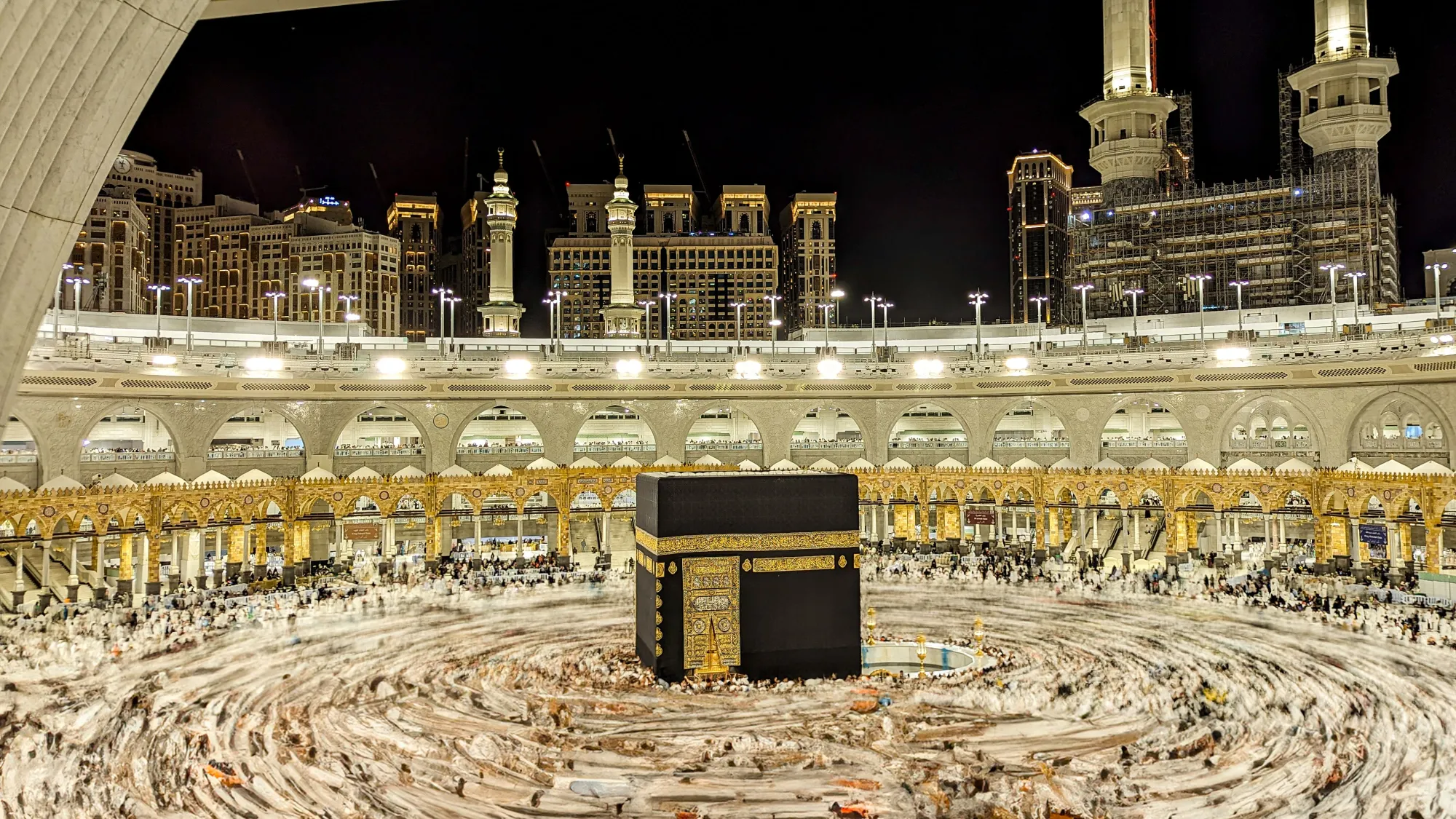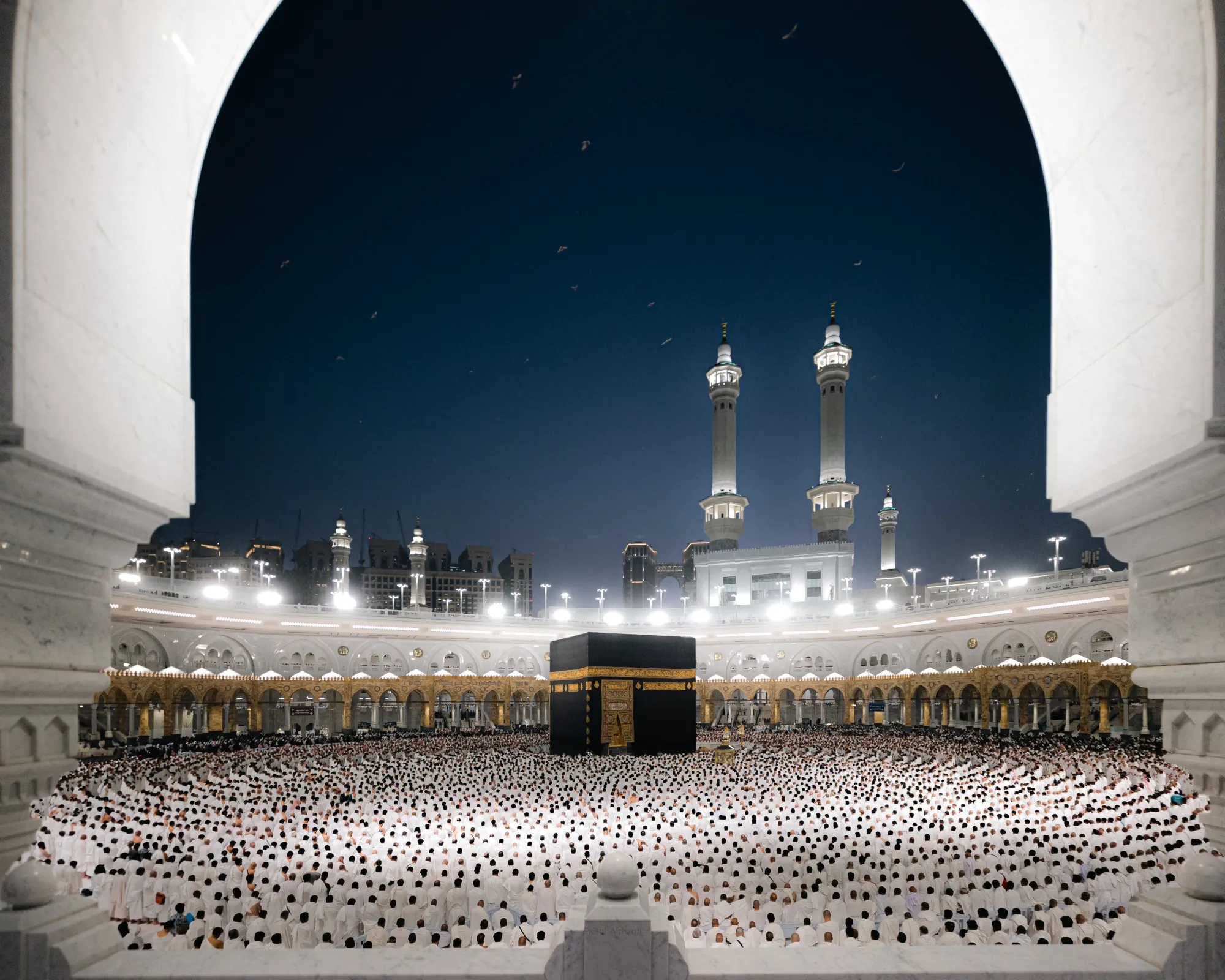
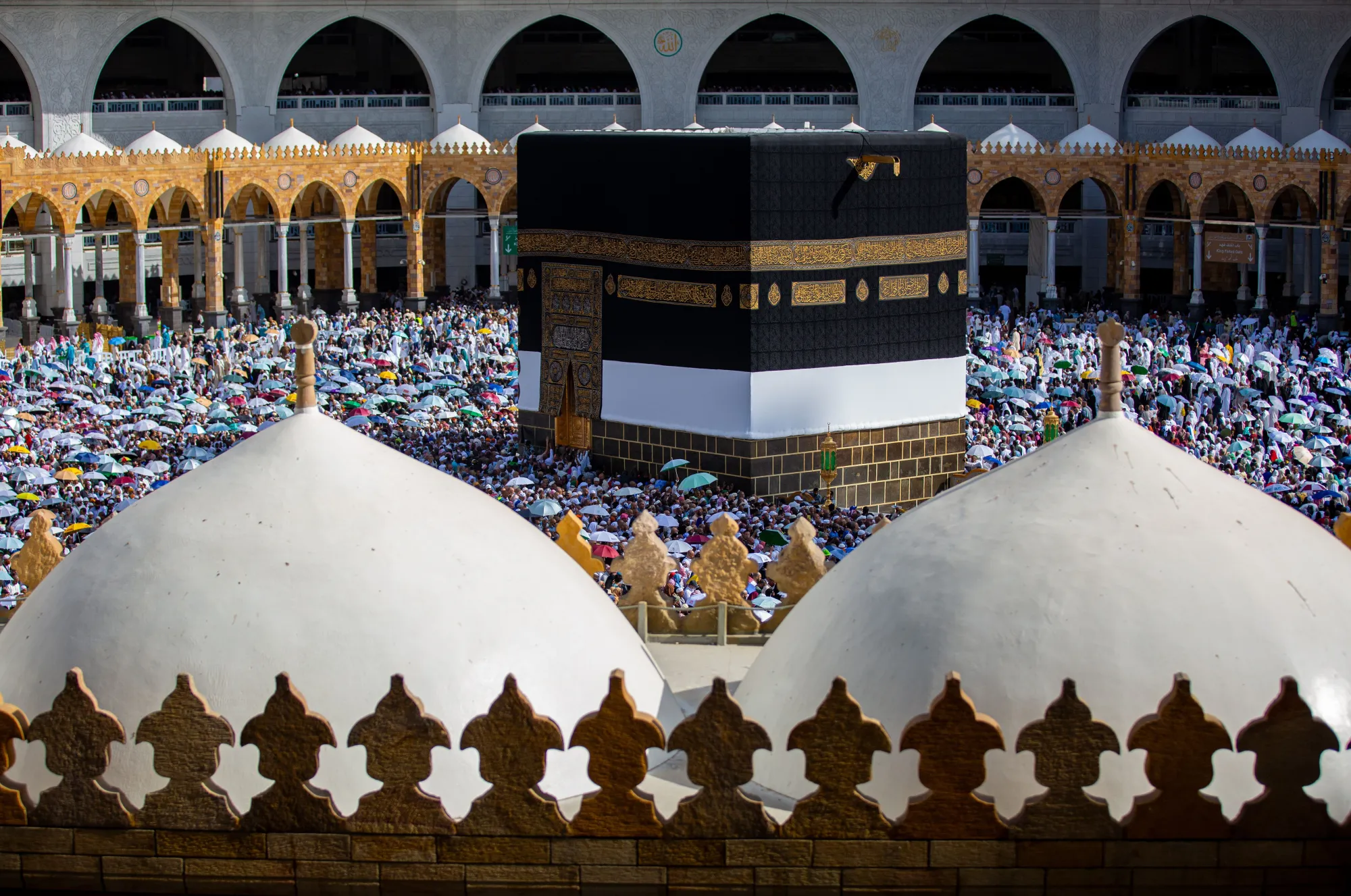
A complete step-by-step Umrah guide for first-timers in 2026 — ihram, the rules of ihram, tawaf, sa'i, and shaving, plus what to do before you travel and after you finish.
Umrah is often called the "lesser pilgrimage," but for a first-timer it can feel anything but lesser. Between the crowds, the unfamiliar rites, and the weight of finally standing before the Kaaba, it is easy to worry about getting something wrong. The good news: Umrah is far simpler than it looks. It is built from just a handful of clear steps, performed in order, and almost everything else is supplication and presence of heart.
This guide walks you through Umrah from start to finish — what to do before you fly, the four core rites in sequence, and what comes after — in plain language for someone doing it for the first time.
Quick answer: Umrah has four essential steps, done in order: (1) enter the state of ihram at the miqat with the intention and the talbiyah; (2) perform tawaf — seven circuits around the Kaaba; (3) perform sa'i — walking seven times between the hills of Safa and Marwah; and (4) shave or trim the hair (halq or taqsir) to exit ihram. Do these correctly and your Umrah is complete. Everything in between is du'a, dhikr, and following the crowd's flow.
Before You Travel: Getting Ready
Most first-timer stress comes from logistics, not the rites. Sort these early and the spiritual side has room to breathe.
Visa, booking and timing
For most travellers Umrah is now accessible on a tourist eVisa or a dedicated Umrah visa, and permits and time-slots are increasingly managed through the official Nusuk app. Read our Nusuk app guide for booking your permit and the Rawdah well before you fly.
Where to stay
Your hotel's distance to the Haram shapes your whole trip — it decides how many times a day you'll comfortably return for prayer. Our guides to the best areas to stay in Makkah and the best areas to stay in Madinah break down neighbourhoods, distances and price by zone.
Getting there and staying connected
Plan your arrival from the airport in advance — see Jeddah Airport to Makkah and, if you're combining both cities, how to travel between Makkah and Madinah. A Saudi eSIM activated on landing means maps, ride-hailing and your group's WhatsApp all work the moment you arrive.
What to pack
- Ihram garments (men: two white unstitched sheets; women: ordinary modest clothing) — bring a spare set.
- Comfortable sandals you can slip off easily and a small drawstring bag for them.
- An unscented toiletry kit — scented soap and perfume are not allowed once in ihram.
- A refillable water bottle, a small prayer mat, and a list of du'as you want to make.
Step 1: Enter Ihram
Ihram is both a physical state and a sacred intention. You enter it at or before a boundary point called the miqat — for many pilgrims flying in, this is crossed in the air, and the captain usually announces it, so prepare beforehand.
How to enter ihram
- Purify yourself — perform ghusl (a full wash) if you can, or at least wudu.
- Dress in ihram. Men wear two plain white unstitched cloths — one around the waist (izar), one over the shoulder (rida). Women wear ordinary modest clothing; there is no special garment, and the face and hands are normally left uncovered.
- Make the intention (niyyah) for Umrah and say: "Labbayk Allahumma Umrah" ("Here I am, O Allah, for Umrah").
- Begin the talbiyah and keep repeating it: "Labbayk Allahumma labbayk, labbayka laa shareeka laka labbayk…"
The rules of ihram
While in ihram, avoid:
- Cutting hair or nails.
- Using perfume or scented products.
- Hunting or harming animals.
- Marriage contracts or intimacy.
- (Men) wearing stitched/fitted clothing or covering the head; (women) covering the face with a fitted veil or wearing gloves.
These restrictions lift once you exit ihram in Step 4.
Step 2: Tawaf Around the Kaaba
When you enter Masjid al-Haram and see the Kaaba, pause — this is a moment many people wait their whole lives for. Make du'a; it is said supplication at the first sight of the Kaaba is answered.
How to perform tawaf
- Start at the Black Stone (Hajar al-Aswad) corner. Face it, raise your hand toward it and say "Bismillah, Allahu Akbar." You do not need to touch or kiss it — pointing from a distance is enough and far safer in the crowd.
- Circle the Kaaba seven times, keeping it on your left. Each circuit begins and ends at the Black Stone.
- Men may do raml (a brisk, slightly hurried walk) in the first three circuits if there's room.
- There is no fixed script — recite Qur'an, make dhikr, and ask Allah for whatever is in your heart. Between the Yemeni Corner and the Black Stone, many recite "Rabbana atina fid-dunya hasanah…"
After tawaf
- Pray two rak'ah behind Maqam Ibrahim if you can reach it, or anywhere in the mosque if it's crowded.
- Drink Zamzam water.
Step 3: Sa'i Between Safa and Marwah
Sa'i re-enacts Hajar's search for water for her infant son Ismail — running between two hills in desperate trust, until the well of Zamzam sprang forth.
How to perform sa'i
- Head to Safa and recite the verse: "Indeed, Safa and Marwah are among the symbols of Allah…" (Qur'an 2:158).
- Face the Kaaba, raise your hands, and make du'a.
- Walk to Marwah — that's one trip. Men do a light jog between the two clearly marked green lights; women walk normally throughout.
- Repeat until you have completed seven trips, ending at Marwah. (Safa → Marwah is 1, Marwah → Safa is 2, and so on.)
There is no required supplication during sa'i — du'a and dhikr in your own words are encouraged the whole way.
Step 4: Halq or Taqsir (Shaving or Trimming)
The final rite releases you from ihram.
- Men: shaving the whole head (halq) is more rewarded, but trimming evenly (taqsir) is allowed.
- Women: trim about a fingertip's length (roughly 2–3 cm) from the end of the hair. Women do not shave.
Once this is done, your Umrah is complete and all the restrictions of ihram are lifted.
| Quick recap | The 4 steps of Umrah |
|---|---|
| 1. Ihram | Intention + talbiyah at the miqat; observe the ihram restrictions |
| 2. Tawaf | 7 circuits around the Kaaba, anti-clockwise, starting at the Black Stone |
| 3. Sa'i | 7 trips between Safa and Marwah, ending at Marwah |
| 4. Halq/Taqsir | Men shave or trim; women trim a fingertip's length — ihram ends |
After Umrah: Making the Most of Your Trip
Umrah itself may take only a few hours, but your journey is longer. Some ways to make it count:
- Return often to the Haram. Each prayer in Masjid al-Haram carries immense reward; a hotel close by makes this realistic.
- Repeat Umrah for others. Many pilgrims perform additional Umrah on behalf of deceased relatives, returning to the miqat (commonly Masjid Aisha / Tan'eem) to re-enter ihram.
- Visit Madinah. Though not part of Umrah, visiting the Prophet's ﷺ Mosque is the spiritual companion to most trips. Plan the journey with our Makkah–Madinah transport guide, then read about the Quba Mosque and Mount Uhud for your ziyarat.
- Explore the sacred landscape of Makkah — the Cave of Hira and the Cave of Thawr bring the seerah to life.
Common First-Timer Mistakes to Avoid
- Touching the Black Stone at all costs. It is sunnah if easy, but never worth injuring yourself or others. Point and move on.
- Losing count during tawaf or sa'i. Use a tasbih counter or your phone, or follow your group leader.
- Wearing scented products in ihram. Check your wet wipes, deodorant and soap before you leave home.
- Over-packing the schedule. Build in rest. Dehydration and exhaustion cause most pilgrims' difficulties.
- Forgetting du'a. Prepare a list in advance so you spend the holy moments asking, not remembering.
Frequently Asked Questions
How long does Umrah take to perform?
The rites themselves usually take two to four hours depending on the crowds — tawaf and sa'i are the longest parts. The whole trip, however, is typically 7–10 days when combined with stays in Makkah and Madinah.
What are the steps of Umrah in order?
There are four: enter ihram with the intention and talbiyah, perform tawaf (seven circuits of the Kaaba), perform sa'i (seven trips between Safa and Marwah), and then shave or trim the hair to exit ihram.
Can I perform Umrah for the first time without a group?
Yes. Many people now perform Umrah independently with a tourist or Umrah visa. A guide or group can ease logistics for first-timers, but it is not required. Read the steps in advance and you can perform it confidently on your own.
What is the miqat?
The miqat is the boundary point at which a pilgrim must enter the state of ihram before proceeding to Makkah. Pilgrims flying in often cross it in the air, so you should be ready to make your intention before landing.
What should women wear for Umrah?
Women wear ordinary modest clothing — there is no special ihram garment. The face and hands are normally left uncovered during ihram, and women trim (rather than shave) a small length of hair at the end.
Do I have to touch or kiss the Black Stone?
No. Touching or kissing the Black Stone is recommended only if it can be done without crowding or harming others. Pointing toward it from a distance while saying "Allahu Akbar" is perfectly valid.
Can I perform Umrah on behalf of someone else?
Yes. You can perform Umrah on behalf of someone who has passed away or is unable to travel. You would first complete Umrah for yourself, then return to a miqat such as Masjid Aisha (Tan'eem) to enter ihram again for the other person.
What breaks the state of ihram?
Completing the final rite — shaving or trimming the hair — lifts the ihram restrictions. Before that, deliberately breaking certain prohibitions (such as intimacy) can invalidate the Umrah or require expiation; consult a scholar if you're unsure.
The Bottom Line
Umrah is four clear steps wrapped in worship: enter ihram, make tawaf, perform sa'i, and trim or shave. Prepare your logistics — visa, hotel near the Haram, airport transfer and a working eSIM — so that when you finally stand before the Kaaba, your mind is free for what actually matters. Go gently, keep your heart present, and ask abundantly.
Last updated: June 2026. This article is informational. For rulings on your personal situation and the current visa and permit requirements, consult a qualified scholar and the official Nusuk channels.